Inside a CNN: Convolutions, ReLU, and Pooling Explained!
CNN-এর ভেতরে: কনভোল্যুশন, ReLU এবং পুলিং-এর সহজ ব্যাখ্যা!
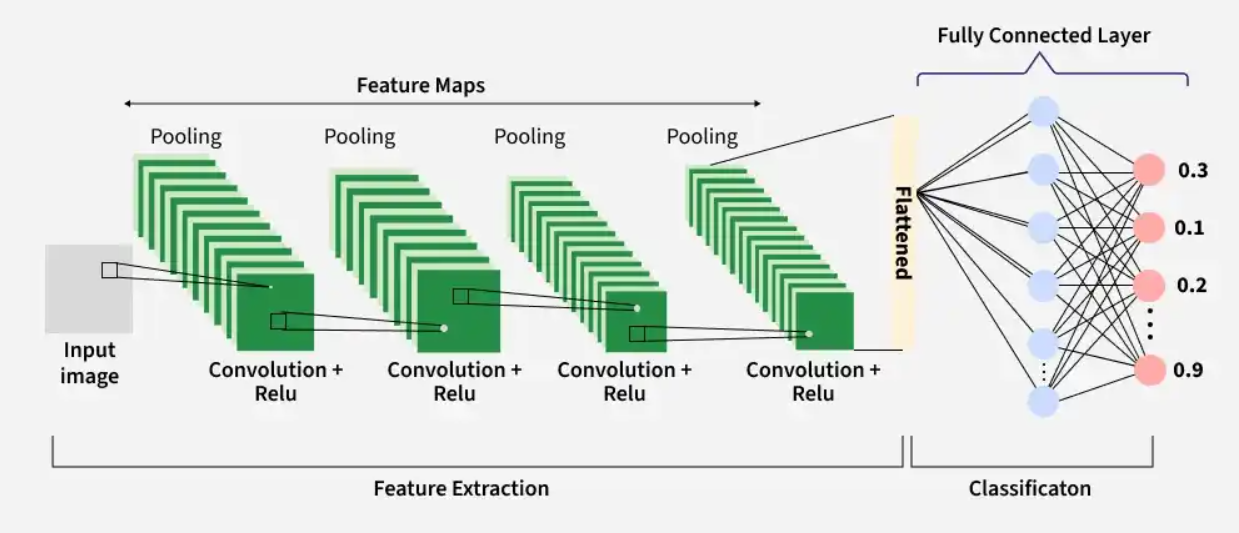
Welcome back! In our last post, we learned what a CNN is and its amazing history. Today, we are going to look inside the engine of a CNN. A typical CNN is mainly built using four types of layers:
- Convolutional Layer
- Pooling Layer
- ReLU (Activation)
- Fully Connected Layer
Let's explore the first three today with some fun analogies!
1. Convolutional Layer (The Detective's Magnifying Glass)
What is it? A Convolutional layer is filled with tiny filters (also called kernels). Imagine these filters as a detective's magnifying glass sliding over an image, looking for clues! Each filter has a specific width, height, and a set of weights.
How does it work? Suppose you have a large image and a small 3x3 filter. The filter slowly slides (or convolves) over the entire image. At every step, it performs an element-wise multiplication and adds all the numbers up.
Filters = Features! Every filter is designed to look for one specific thing. For example, one filter might be a "Curve Detector".
- When it finds a match: If the filter slides over a part of the image that looks exactly like a curve, the math generates a huge number (like a loud alarm going off: "BEEP! I found a curve here!").
- When there is no match: If it slides over a straight line, the result is 0 (or very small), meaning the filter stays quiet.
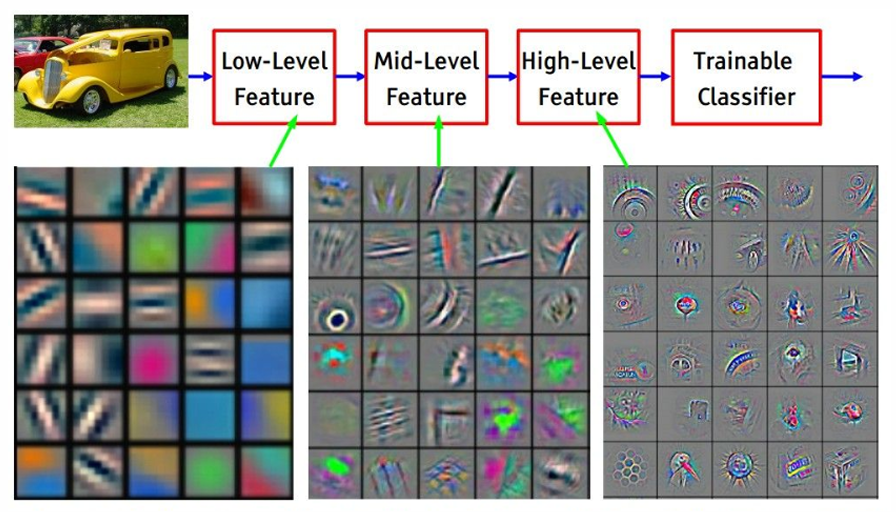
The Feature Hierarchy (From Lines to Cars) Here is the coolest part: CNNs use multiple layers stacked together to learn complex things step-by-step!
- Low-Level Features (Layer 1): Learns basic things like straight lines, edges, and colors.
- Mid-Level Features (Layer 2): Combines the lines to recognize shapes like circles or squares.
- High-Level Features (Layer 3): Combines shapes to recognize parts of an object (like wheels or windows).
- Finally, the classifier says, "Ah! It's a Car!"
2. ReLU Layer (The Strict Switch)
What is it? ReLU (Rectified Linear Units) is an activation layer usually placed right after a convolutional layer to introduce non-linearity.
How does it work? The formula is incredibly simple: $y = \max(x, 0)$. Think of it like a very strict switch. If the signal is negative, it just shuts it down (makes it 0). If the signal is positive, it lets it pass through exactly as it is.
Why do we need it? It helps the network learn complex decision boundaries and prevents overfitting. It simply ignores all the useless negative noise and only focuses on the positive, important signals!
3. Pooling Layer (The Summarizer)
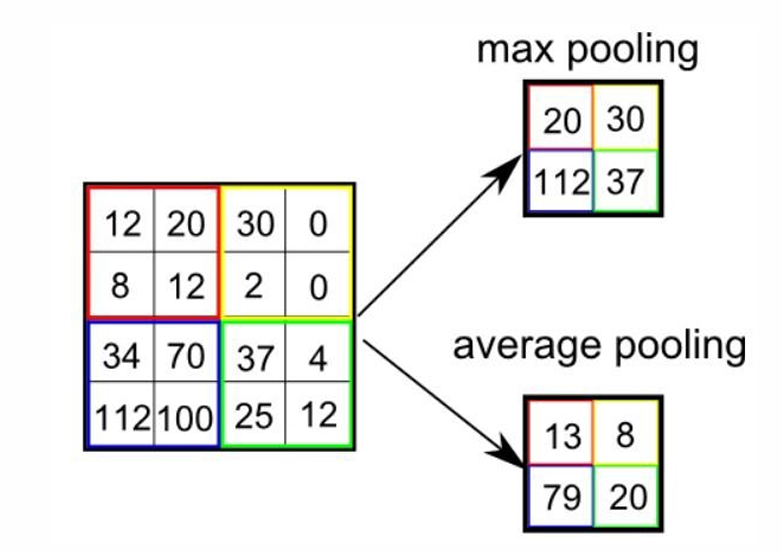
What is it? Pooling (or down-sampling) is used to shrink the size (dimensions) of the feature map while keeping the most important information intact.
How does it work? Just like convolution, a window slides over the image. But instead of multiplying, it does something simpler:
- Max Pooling: Takes only the largest number in that window. (This is the most popular one!)
- Average Pooling: Takes the average of the numbers in the window.
Real-life Analogy: Imagine you are shrinking a huge poster into a small postcard. You don't need every single pixel; you just keep the brightest/strongest colors so the picture still looks the same. That is exactly what Pooling does! It saves computational power without losing the big picture.
[!NOTE] IMPORTANT NOTES FOR NOTEBOOK Concept: CNN Core Layers (Convolution, ReLU, Pooling) Key Point 1: Convolutional layers use filters that slide over the image to detect features. A large output value means a match; zero means no match. Key Point 2: Layers form a hierarchy: low-level (edges) $\rightarrow$ mid-level (shapes) $\rightarrow$ high-level (complex objects). Key Point 3: ReLU ($y = \max(x, 0)$) introduces non-linearity and filters out negative signals. Key Point 4: Max pooling reduces spatial dimensions, preserving dominant features while vastly reducing computational cost.
আবারও স্বাগতম! গত পোস্টে আমরা জেনেছিলাম CNN কী এবং এর দারুণ ইতিহাস সম্পর্কে। আজ আমরা জানবো একটি CNN-এর ভেতরে আসলে কী থাকে! একটি সাধারণ CNN মূলত ৪ ধরনের লেয়ার দিয়ে তৈরি হয়: ১. Convolutional Layer (কনভোল্যুশনাল লেয়ার) ২. Pooling Layer (পুলিং লেয়ার) ৩. ReLU (অ্যাক্টিভেশন লেয়ার) ৪. Fully Connected Layer (ফুল্লি কানেক্টেড লেয়ার)
চলো, আজ প্রথম ৩টি লেয়ার নিয়ে মজার কিছু উদাহরণ দিয়ে আলোচনা করি!
১. Convolutional Layer (গোয়েন্দার ম্যাগনিফাইং গ্লাস)
এটি কী? একটি কনভোল্যুশনাল লেয়ারে অনেকগুলো ছোট ছোট filter (বা কার্নেল) থাকে। ফিল্টারগুলোকে তুমি একজন গোয়েন্দার ম্যাগনিফাইং গ্লাসের সাথে তুলনা করতে পারো, যা পুরো ছবির ওপর দিয়ে স্লাইড করে বা ঘুরে ঘুরে ক্লু (clue) খোঁজে! প্রতিটি ফিল্টারের একটি নির্দিষ্ট দৈর্ঘ্য, প্রস্থ এবং কিছু ওয়েট (weight) থাকে।
এটি কীভাবে কাজ করে? ধরো, তোমার কাছে একটি বড় ছবি এবং ৩x৩ সাইজের একটি ছোট ফিল্টার আছে। ফিল্টারটি ছবির ওপর দিয়ে আস্তে আস্তে স্লাইড করে। প্রতিটি ধাপে এটি ছবির পিক্সেলের সাথে তার নিজের ওয়েট গুণ (element-wise multiplication) করে এবং সব যোগ করে একটি সংখ্যা তৈরি করে।
ফিল্টার মানেই ফিচার! প্রতিটি ফিল্টার নির্দিষ্ট একটি জিনিস খোঁজার জন্য তৈরি হয়। যেমন, একটি ফিল্টার হতে পারে "Curve Detector" বা বাঁকা দাগ খোঁজার ফিল্টার।
- ম্যাচ হলে কী হয়: ফিল্টারটি যখন ছবির এমন কোনো অংশের ওপর দিয়ে যায় যেখানে আসলেই বাঁকা দাগ আছে, তখন গুণফলটি একটি বিশাল বড় সংখ্যা হয়! (যেন অ্যালার্ম বেজে ওঠে: "বিপ! আমি এখানে একটা বাঁকা দাগ পেয়েছি!")।
- ম্যাচ না হলে: আর যদি ফিল্টারটি কোনো সোজা দাগের ওপর দিয়ে যায়, তবে গুণফল হয় ০ (বা খুব ছোট)। মানে ফিল্টারটি তখন চুপ থাকে।
ফিচারের স্তর (রেখা থেকে আস্ত গাড়ি!) সবচেয়ে দারুণ ব্যাপারটি হলো—CNN ধাপে ধাপে জটিল জিনিস শিখতে পারে!
- Low-Level Feature (১ম লেয়ার): সাধারণ জিনিস শেখে, যেমন- সোজা দাগ, বাঁকা দাগ বা রঙের পার্থক্য।
- Mid-Level Feature (২য় লেয়ার): দাগগুলোকে জোড়া লাগিয়ে গোল বা চারকোনা আকৃতি (shape) শেখে।
- High-Level Feature (৩য় লেয়ার): আকৃতিগুলো মিলিয়ে গাড়ির চাকা বা জানালা চিনতে শেখে।
- সবশেষে, ক্লাসিফায়ার সিদ্ধান্ত নেয়, "আরে! এটা তো একটা গাড়ি!"
২. ReLU লেয়ার (কড়া দারোয়ান)
এটি কী? ReLU (Rectified Linear Units) হলো একটি অ্যাক্টিভেশন লেয়ার, যা কনভোল্যুশনের ঠিক পরেই বসানো হয় নেটওয়ার্কে non-linearity বা অ-রৈখিকতা আনার জন্য।
এটি কীভাবে কাজ করে? এর ফর্মুলা খুবই সহজ: $y = \max(x, 0)$। একে একটি কড়া দারোয়ান বা সুইচের মতো ভাবতে পারো। যদি ইনপুট সিগন্যাল নেগেটিভ হয়, সে তা জিরো (০) করে দেয়। আর যদি পজিটিভ হয়, তবে ঠিক যেমন আছে তেমনই ভেতরে ঢুকতে দেয়।
এটি কেন দরকার? এটি নেটওয়ার্ককে জটিল সিদ্ধান্ত নিতে সাহায্য করে এবং overfitting কমায়। এটি সব ফালতু নেগেটিভ সিগন্যাল বাদ দিয়ে শুধু গুরুত্বপূর্ণ পজিটিভ সিগন্যালের দিকেই ফোকাস করে!
৩. Pooling লেয়ার (সারসংক্ষেপ তৈরি করা)
এটি কী? পুলিং (Pooling) বা ডাউন-স্যাম্পলিং হলো ছবির সবচেয়ে গুরুত্বপূর্ণ তথ্যগুলো ধরে রেখে তার সাইজ (dimension) ছোট করে ফেলার একটি দারুণ পদ্ধতি।
এটি কীভাবে কাজ করে? কনভোল্যুশনের মতোই এখানে একটি উইন্ডো ছবির ওপর দিয়ে স্লাইড করে। তবে গুণের বদলে এখানে খুব সহজ একটি কাজ হয়:
- Max pooling (ম্যাক্স পুলিং): উইন্ডোর ভেতরের সবচেয়ে বড় সংখ্যাটিই শুধু নেওয়া হয়। (এটিই সবচেয়ে বেশি ব্যবহৃত হয়!)
- Average pooling (অ্যাভারেজ পুলিং): উইন্ডোর সংখ্যাগুলোর গড় নেওয়া হয়।
বাস্তব জীবনের উদাহরণ: ধরো, তুমি একটি বিশাল বড় পোস্টারকে ছোট করে একটি পোস্টকার্ড বানাচ্ছো। তোমার সব পিক্সেলের দরকার নেই; তুমি শুধু সবচেয়ে উজ্জ্বল আর গাঢ় রংগুলো রেখে দিলে, যাতে ছোট হলেও ছবিটা বোঝা যায়। পুলিং ঠিক এই কাজটাই করে! এটি মেইন থিম ঠিক রেখে কম্পিউটারের খাটুনি অনেক কমিয়ে দেয়।
[!NOTE] IMPORTANT NOTES FOR NOTEBOOK Concept: CNN Core Layers (Convolution, ReLU, Pooling) Key Point 1: Convolutional layers use filters that slide over the image to detect features. A large output value means a match; zero means no match. Key Point 2: Layers form a hierarchy: low-level (edges) $\rightarrow$ mid-level (shapes) $\rightarrow$ high-level (complex objects). Key Point 3: ReLU ($y = \max(x, 0)$) introduces non-linearity and filters out negative signals. Key Point 4: Max pooling reduces spatial dimensions, preserving dominant features while vastly reducing computational cost.